
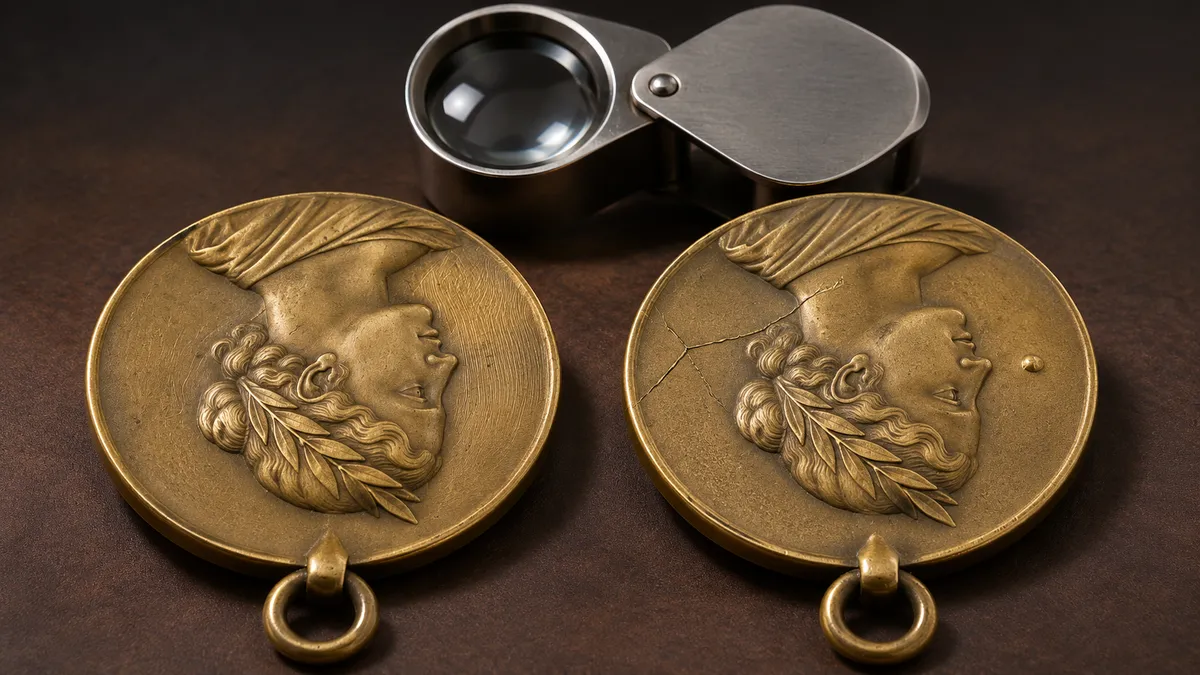
A search for a token returns two rows with the same three letters. One has a familiar logo. The other has a much lower price. Which one did the project issue? Neither the letters nor the apparent discount answers that question.
What the symbol identifies
On Ethereum, a token contract can expose a short symbol for wallets to display. The ERC-20 specification even makes the symbol optional. There is no registration step in that standard reserving one spelling for one issuer. Separate contracts can return the same string, and a wallet can list both.
Imagine a fictional project named PINE. Its site identifies an Ethereum contract, while a search shows two PINE pools on Ethereum. Both pools may have real trades. The existence of a market establishes that somebody traded those particular tokens. It tells you little about which contract the project recognizes.
Match the asset in three places
Start with the issuer’s official documentation, reached independently of the search result. Record its chain and full contract address. Open that chain’s explorer and look up the contract. Finally, open the asset details behind the swap quote and compare the full address with the one you recorded. A result on another network needs a separate issuer reference, even if the address looks familiar.
If the issuer lists more than one deployment, check what each represents. For example, our Arbitrum USDC guide shows how one network can host both a native asset and a bridged version. Some exchanges accept only one.
If your records already contain both
Keep separate rows for each network and contract in your spreadsheet. Suppose you acquired ten units of each PINE. A price feed that looks up only the ticker could value all twenty at the more expensive token’s price. Correcting the identifier fixes the accounting without moving a single token. If you cannot establish the issuer’s contract, leave the position unpriced until you can.